
Is There Mold?
A free DIY mold-inspection guide - and why I abandoned the project.

I decided to try my hand and writing a lead-magnet product for a business idea I had. The business concept was a service-based business that provided customers with virtual mold-inspections and mold-free and healthy-home design consultation for renovations and new construction. I chose this niche because of a personal experience with a moldy home and my expertise in architecture and building technology. I had: personal history; skill/expertise; and interest in the subject. These seemed like a great combination to provide me with the necessary foundation to build something amazing and infinitely profitable.
The intent was to first build an audience and provide valuable and free information through social media. This is a strategy that my favourite entrepreneur/social media tycoon, Alex Hormozi, employs (seriously, check him out if you’ve been living under a rock and don’t already know who he is and you’re interested in entrepreneurship). What I learned from him is that by providing real value, not “sucky-fluff” as he says, you build trust. With the right strategy, you can take trust to the bank. It’s absolutely critical that there is value in your free content though otherwise you’re just a charlatan and charlatan’s always get revealed. So with that, I had grand plans to take the world on with my moldy business.
To get started, I made some Instagram templates for posting. It was my first attempt and creating content specifically intended to build an audience. I designed a little logo and came up with a posting strategy that would (ideally) set me up for explosive growth. Each post would identify a common issue and provide some simple background information on the problem and a potential solution. It’s easy to go deep into little things and it can get complicated very quickly so I tried to be brief and to the point. The slide would introduce the problem and I’d write a description in the post to elaborate. I actually used ChatGPT to come up with posts. It would create a list that I could plug into Canva and auto-generate 20+ posts at a time. That was pretty great. With a little supervision, AI is a wonderful tool that can magnify your productivity.
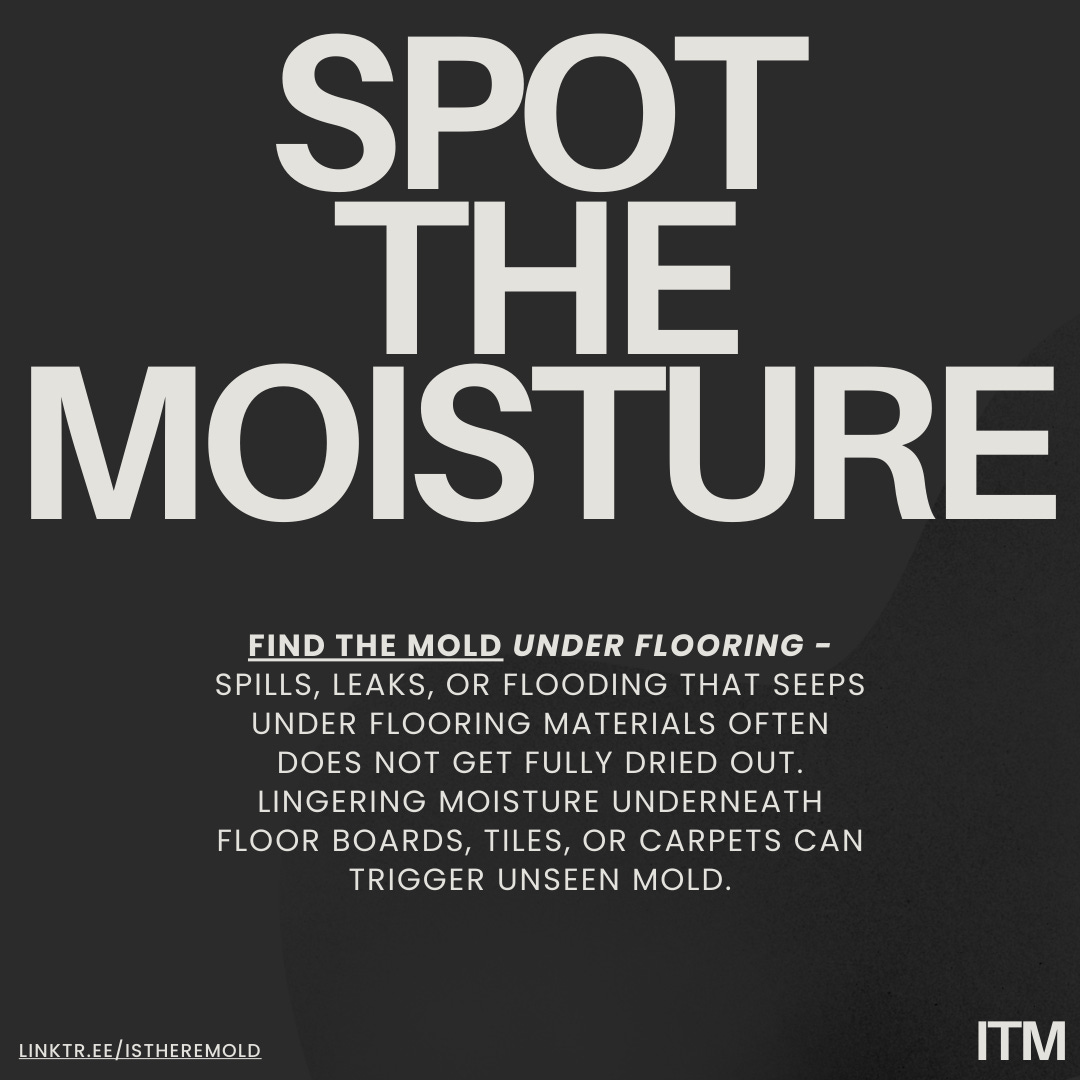
In the meantime, I began writing my mold-inspection guide. I’ve never really written anything before, other than my masters thesis, but I do enjoy writing. I never much enjoyed reading due to dyslexia but I found writing much easier and enjoyable than reading so off I went. I designed the document to be kind of an active checklist for people to work through to determine the problem(s) and potential solutions. I made it through in about a month of very part-time work. It was pretty easy to build because it was so straight forward in my mind. I again used ChatGPT to help fill in some of the holes and do some of the tedious parts. I used some stock images also. My intent was to eventually have a library of images from customers that I could write case-studies on for other people’s benefit.
Here is the guide. Of course, always available for free.
So I thought I had all the elements necessary for an explosive channel and business. In order to start to build an audience I began engaging with Facebook communities about mold and healthy homes. This opened my eyes in a few ways. For one, I was blown away at how abundant mold problems are in (mostly) the US. Something like 70% of homes have mold problems. SEVENTY PERCENT! The second thing that blew me away is how invisible of a problem it is. It’s invisible not because mold is sometimes not directly visible but because people simply don’t know how big of a problem that living in a moldy environment is for their health. Many people consider mold to be the cause of numerous childhood afflictions like asthma, eczema, chronic infections, etc. It’s wild and extremely problematic. I saw all kinds of horror stories on in those groups and hearing about how difficult it is to remediate and cure themselves after being exposed for long periods of time. It really broke my heart to see how helpless some people were. I wanted to help but I decided to shelve it.
Could I have made it into something? Most likely yes. Is it a million dollar business? Most likely yes. So why did I shelve it?
I love ideas. I love business. I love coming up with business ideas and either testing them or pretend to test them. I build spreadsheets to project potential earnings and drool over the numbers. It’s a fun kind of game but I know it’s just that. Projecting numbers doesn’t align with reality and in order to determine the numbers, you need to actually do the dirty work and test in real-world scenarios. I decided to shelve this project because there were other projects I wanted to work on. I get distracted easily and have spent a large portion of my life chasing shiny objects and I want to focus on one thing. This was not that one thing.
I’m now trying to be relentless about focus. This is a very difficult task for me because my mind is always running and coming up with new shiny objects. Instead of chasing them now, I just write it all down into a journal and save it for a rainy day. If I keep going back to it then maybe it’s worth pursuing, until then: focus on the one thing.
Enjoy my free guide. Drop me a review to help boost it.
-Ryan.
I appreciate how honestly you shared the full arc of the idea—not just the shiny “business concept,” but the emotional weight of seeing real people struggle, and the discipline it takes to walk away from something that could work but isn’t the right thing right now. The mix of personal experience, technical expertise, and empathy comes through clearly, especially when you talk about engaging with those mold communities and https://fsginspections.com/ that part hit hard. Also refreshing to see such a grounded take on AI as a tool, not a crutch. Even though you shelved the project, the guide itself feels like a real act of service.